Jupiter Hammon Biography
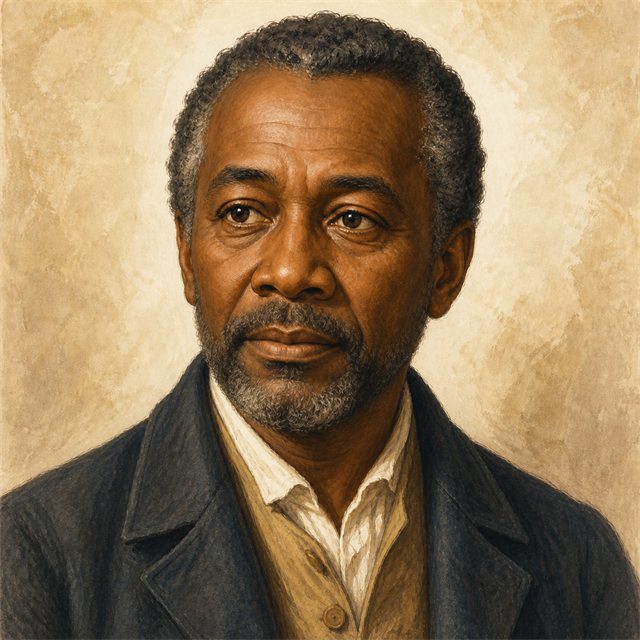
Jupiter Hammon was one of the founding figures of early American letters and one of the earliest Protestant writers in North America. Born in 1711 on Long Island, New York, Hammon became known as a poet, essayist, exhorter, and Christian moral teacher. His first published poem, “An Evening Thought: Salvation by Christ, with Penitential Cries,” appeared in 1760 and made him one of the earliest published American poets. His later works include addresses, poems, and religious exhortations, most famously “An Address to the Negroes in the State of New-York,” delivered to the African Society in New York and printed in 1787.
Hammon’s importance is not merely literary. His writings are saturated with Protestant concern for salvation, repentance, Scripture, heaven, judgment, and the duty of holy living. He wrote as a Christian who believed words should awaken the conscience and direct the reader toward Christ. His poems are full of biblical language, especially the language of sin, mercy, death, eternity, and redemption. He is often studied as an early American author, but he should also be read as an evangelical Protestant voice whose literary work was an instrument of exhortation.
His doctrine of salvation is explicit in the very title of his first publication: salvation is “by Christ.” Hammon’s work presses the reader to consider sin honestly, seek mercy earnestly, and prepare for eternity. His thought is marked by traditional Calvinist and evangelical assumptions common to the religious world of the eighteenth century. He writes with confidence that God is sovereign, that man is accountable, that death and judgment are real, and that Christ is the only sure hope for sinners.
Hammon’s sanctification ethic is equally clear. In “An Address to the Negroes in the State of New-York,” he urges his hearers toward sobriety, prayer, moral discipline, honesty, humility, and faithfulness. His tone is pastoral: he wants his people to live as Christians before God and neighbor. He does not reduce Christianity to inward sentiment. He expects faith to take visible form in conduct, speech, work, family responsibility, and readiness for death.
The historical details of Hammon’s household are limited. Surviving records do not clearly establish whether he had a wife or children. That absence should be handled carefully. It reminds us that much of his personal life is hidden from us, while his published Christian witness remains plain. What we do know is that he lived in the world of the Lloyd family of Long Island and Connecticut, received an unusual education for his time, worked as a clerk and trusted servant, and became literate enough in Scripture, poetry, and public address to leave a permanent mark on American religious and literary history.
Hammon appears to have attended Christian assemblies in the Anglican and Congregational worlds, and his writings show the doctrinal air of Protestant New England and New York. He is not best understood as a modern political writer who merely happened to use religious language. Rather, his religion is the center. His concern for his people is evangelical and eternal before it is social. He writes so that sinners might reckon with God, know Christ, and walk wisely.
The Haynes Institute receives Hammon as a hero of the faith because his works display an early, serious, Scripture-shaped Protestant voice. He shows that American religious writing began with Christ, repentance, eternity, and moral formation. His legacy belongs on the shelf beside other early Protestant exhorters who used learning, poetry, and public address to call hearers to salvation and holiness.