Lemuel Haynes Biography
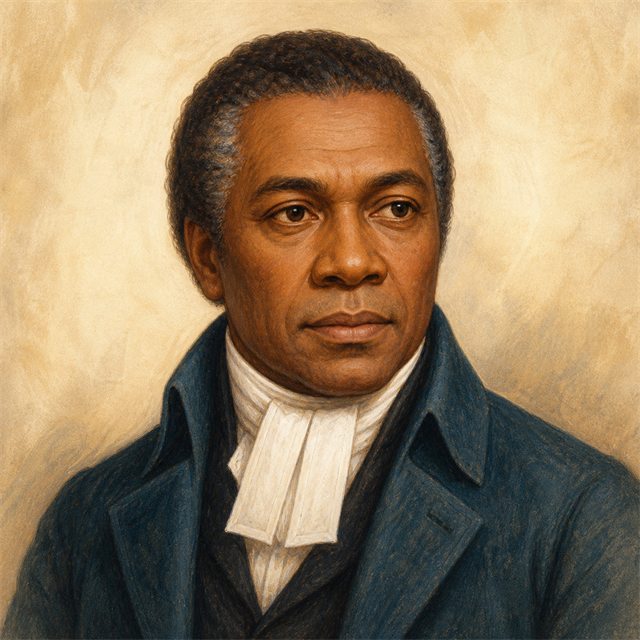
Lemuel Haynes stands among the most remarkable Protestant ministers in early American history. Born in West Hartford, Connecticut, in 1753, Haynes became a Congregational minister, a preacher of evangelical Calvinism, and one of the earliest theological writers in the United States. He was ordained in 1785 and served churches in Connecticut, Vermont, and New York, most notably the West Parish Church of Rutland, Vermont, where he ministered for roughly thirty years. Middlebury College later granted him an honorary Master of Arts degree, a public recognition of his learning, usefulness, and reputation as a preacher.
Haynes should be remembered first as a minister of the Word. His sermons are marked by the doctrinal grammar of New England Protestantism: the holiness of God, the inability of fallen man, the necessity of the new birth, the sufficiency of Christ, the moral obligation of all hearers to repent and believe, and the glory of divine sovereignty. He read and absorbed the evangelical Calvinist world of the eighteenth century, including the theological influence of Jonathan Edwards, George Whitefield, and the wider Puritan and post-Puritan tradition. His preaching did not treat doctrine as decoration. Theology governed the sermon, the conscience, the church, and the household.
His sermon material shows a rich account of salvation. In his teaching on regeneration, Haynes insists that the new birth is not finally produced by human resolution, religious culture, outward light, or moral pressure. It is the immediate work of the Holy Spirit, who conquers the heart’s native enmity and gives a new disposition toward God. From that new life flow faith, repentance, love, obedience, and perseverance. Haynes’s order of salvation was deeply Protestant: grace is prior, Christ is necessary, the Spirit is effectual, and the believer’s holiness is the fruit of divine life rather than the purchase price of divine favor.
That same theological instinct shaped his view of sanctification. Haynes spoke of the regenerate person as one who loves God supremely, loves the law of God, repents of sin, believes the gospel, and walks in the ordinances of God. The Christian life, for Haynes, was not sentimental uplift but a holy change of heart made visible in worship, obedience, benevolence, and perseverance. He joined doctrine to piety and piety to moral seriousness.
Haynes married Elizabeth Babbitt in 1783. She was a schoolteacher, and their marriage became part of his long pastoral life in New England and New York. They raised a large family together, and the domestic setting of Haynes’s life matters for understanding his ministry. He was not merely a public religious figure but a husband, father, pastor, and household theologian whose doctrine was meant to form ordinary Christian life.
His writings include sermons, occasional addresses, theological arguments, and political reflections. “Liberty Further Extended” is often remembered for its argument against manstealing and unlawful bondage, but the deeper pattern across his writings is the conviction that God’s moral government stands over every creature and institution. Haynes wrote as a man who believed that the Lord rules history, judges sin, saves sinners by grace, and summons all people to obedience.
The Haynes Institute treats Haynes as a hero of the faith because he demonstrates that early American Protestantism was not thin, borrowed, or merely reactive. In Haynes we find doctrinal precision, evangelical urgency, pastoral gravity, and confidence in the sovereign grace of God. His life gives modern readers a doorway into a rich Protestant inheritance that belongs to the whole church.