Joseph H. Jackson Biography
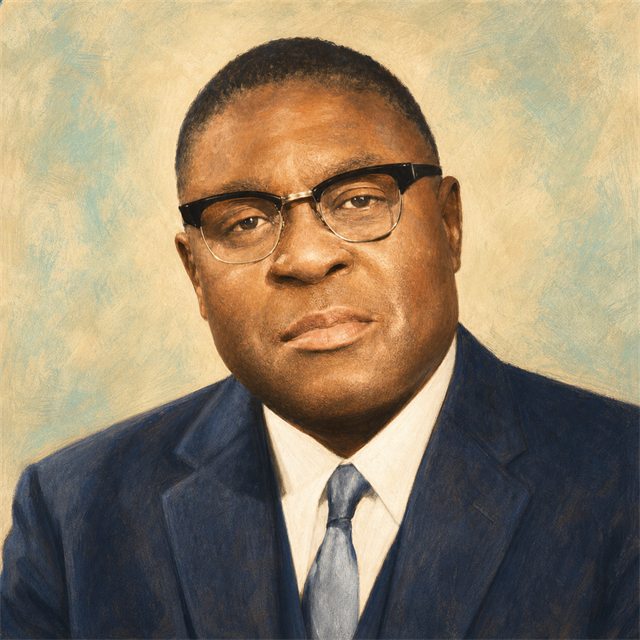
Joseph Harrison Jackson was one of the most significant Baptist leaders of the twentieth century. Born in Mississippi in 1900, Jackson was ordained as a Baptist minister at a young age and pursued serious theological education, earning degrees from Jackson College, Colgate Rochester Divinity School, and Creighton University. In 1941 he became pastor of Olivet Baptist Church in Chicago, one of the most prominent churches in America. He remained connected to Olivet for the rest of his life and served as president of the National Baptist Convention, U.S.A., Inc. from 1953 into the early 1980s.
Jackson’s public reputation is often reduced to his disagreements with the activist wing of the civil rights era. That reduction misses the center of his work. Jackson was a Baptist churchman, institutional builder, preacher, denominational statesman, and moral theologian of public responsibility. His addresses return again and again to the gospel, the church, lawful order, personal repentance, education, economic development, family strength, and the formation of disciplined Christian people. He believed the church’s deepest power was not in agitation but in conversion, preaching, teaching, worship, stewardship, and sanctified character.
As a Baptist, Jackson stood in the free church Protestant tradition. He emphasized the authority of Scripture, the preached Word, evangelism, believer’s response to the gospel, congregational life, missions, and moral obedience. His doctrine of salvation centered on the one gospel of Jesus Christ rather than racial, political, or merely social programs. He did not deny public responsibility, but he resisted any movement that would make the church’s mission primarily political. The church, in his thought, must preach Christ, call men to repentance, teach one moral standard, and form a people who can live responsibly before God and neighbor.
Jackson’s doctrine of sanctification was especially prominent. He saw moral renewal as necessary for public renewal. In his addresses, the Christian life involved repentance, restraint, duty, discipline, gratitude, industry, family order, neighbor-love, and institutional faithfulness. He warned against one-sided accounts of guilt that left some men confessing sin while others imagined themselves innocent. For Jackson, every people and every person stands before God. A community cannot be healed merely by receiving concessions from others; it must also repent of its own sins, cultivate responsibility, and grow in grace.
Jackson married Maude Thelma Jackson in 1927. She was publicly associated with many of his labors and was honored alongside him in church and denominational life. They had one daughter, Kenny Jackson Williams. This household setting is worth remembering because Jackson’s ministry was not only national and denominational. It was also pastoral, familial, and local, rooted in a congregation and in the ordinary forms of Christian life.
His writings and addresses include annual convention messages and denominational pamphlets such as “What, Then, Must We Do Now?” These works show a preacher thinking doctrinally about history, citizenship, race, church unity, Christian duty, and the moral obligations of free men. He often spoke in the register of Christian stewardship: God gives gifts, opportunities, institutions, and responsibilities, and men must answer for what they do with them.
The Haynes Institute regards Jackson as a hero of the faith because he represents a strong, institution-minded stream of Protestant Christianity. His legacy is not perfection, and it should not be flattened into nostalgia. But he gives modern Christians a needed example of theological seriousness joined to household order, church loyalty, civic responsibility, and productive labor. Jackson reminds us that Protestant faithfulness must become visible in pulpits, churches, schools, budgets, families, and neighborhoods.