William Bishop Johnson Biography
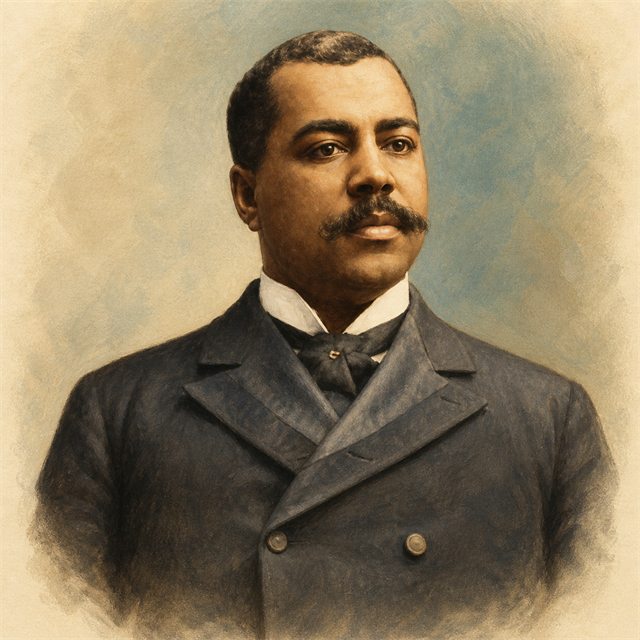
William Bishop Johnson belongs among the Baptist pastors, editors, and denominational builders whose work deserves renewed attention. He served as pastor of Second Baptist Church in Washington, D.C., and as managing editor of the National Baptist Magazine, the first official publication of the National Baptist Convention. In that role, Johnson stood at the meeting place of pulpit, press, and institutional life. He was not only preaching to a local congregation, but helping shape a broader Baptist conversation about doctrine, church order, education, missions, public morals, and the responsibilities of Christian people.
Johnson should be remembered as a churchman with a public mind. The National Baptist Magazine published sermons, editorials, denominational news, book reviews, poetry, biographical sketches, and articles on religious and contemporary concerns. Its range shows the breadth of the world Johnson inhabited. Baptist life was not reduced to Sunday meetings alone. It included preaching, teaching, print culture, discipline, missions, temperance, education, race relations, and the moral formation of households and communities. Johnson’s editorial work therefore fits naturally within the Haynes Institute’s concern to recover Protestant sources that shaped churches, families, and civic life.
His published work includes The Scourging of a Race: And Other Sermons and Addresses, issued in 1904. Even the title tells us something about the period in which Johnson labored. He preached and wrote in an age of public violence, humiliation, denominational formation, and urgent debate over the future of American life. Yet he is best approached not merely as a witness to grievance, but as a minister seeking to speak Christian truth into the sorrows and duties of his people. His sermons and addresses should be read with attention to the gospel convictions, moral judgments, and ecclesiastical commitments that governed his public voice.
Johnson’s place in the Baptist tradition also helps us see how much intellectual and institutional energy existed in the churches. He was part of a world that believed the printed page could strengthen the pulpit and that the pulpit could strengthen public life. The pastor was not expected to be a mere religious performer. He was to be a shepherd, teacher, organizer, editor, and defender of Christian duty. The church, likewise, was not treated as an emotional refuge from the world, but as a disciplined household of faith called to worship God, preach Christ, instruct the saints, and prepare men and women for useful labor.
The Haynes Institute receives Johnson as an important figure because he represents the kind of Protestant seriousness that must be recovered: preaching joined to publication, denominational work joined to local church responsibility, and public concern joined to Christian moral formation. His work reminds modern readers that American Protestantism was not thin, shallow, or merely reactive. It produced pastors who built institutions, edited journals, preached sermons, and addressed the whole life of their people before God.
Source Notes
- The Southern Baptist Historical Library & Archives identifies William Bishop Johnson as pastor of Second Baptist Church in Washington, D.C., and managing editor of the National Baptist Magazine: https://sbhla.org/digital-resources/national-baptist-magazine/
- The Scourging of a Race: And Other Sermons and Addresses was published in 1904 by Beresford: https://play.google.com/store/books/details/William_Bishop_Johnson_The_Scourging_of_a_Race?id=uk1AAQAAMAAJ
- The Journal of Negro History records W. Bishop Johnson among ministers ordained by Metropolitan Baptist Church in Washington, D.C.: https://en.wikisource.org/wiki/Page:Journal_of_Negro_History,_vol._7.djvu/109
The Church, the State, and the Home
William Bishop Johnson sets the church, the state, and the home in their divinely appointed spheres, with the church as the moral and civilizing force that lifts households, nations, and peoples toward God.
SermonThe Coming of Shiloh
William Bishop Johnson preaches Genesis 49:10 as a missionary sermon on Christ the promised Shiloh, the certainty of God's prophecy, and the gathering of the nations to his reign.