E. K. Love Biography
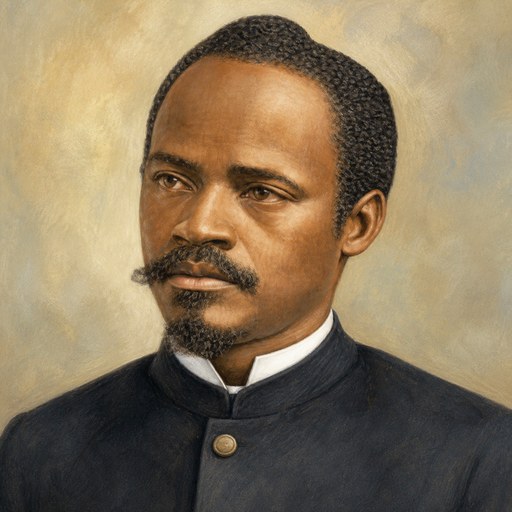
Emanuel King Love was one of the major Baptist ministers, writers, missionaries, and denominational builders of the nineteenth century. Born in Perry County, Alabama, on July 27, 1850, Love came of age during the great upheaval of emancipation and Reconstruction. He was converted in 1868, baptized that same year, and soon began preaching. From the beginning, his life joined evangelical conviction to disciplined study, pastoral labor, and public usefulness.
Love pursued formal education with seriousness. He studied at the Augusta Institute, the school that later became Morehouse College, and graduated in 1877. His training did not make him less Baptist, less pastoral, or less evangelistic. It furnished him for a ministry in which doctrine, preaching, history, missions, and denominational organization belonged together. Love’s career is a useful reminder that the older Baptist tradition prized learning not as a substitute for piety, but as a servant of the pulpit and the churches.
Before his Savannah pastorate, Love served churches and worked as a missionary in Georgia. He represented northern Baptist missionary and publishing societies and became known for effective Sunday school mission work. This missionary labor matters for understanding him. Love did not treat the church as a merely local religious society, nor did he treat Baptist doctrine as a private preference. The church was to teach, evangelize, organize, publish, send, and strengthen the people of God.
In 1885 Love accepted the call to First African Baptist Church in Savannah, Georgia, one of the most important Baptist congregations in America. He entered the pastorate at thirty-five years old, and contemporary Baptist witnesses described him as a diligent student of Scripture, a sound theologian, and a powerful preacher. His introductory sermon on entering that pastorate was later published as a religious discourse on the work, character, and responsibilities of a minister. That alone tells us something about Love’s instincts. He understood pastoral office as a holy trust before Christ, not merely a platform for racial uplift or civic influence.
Love’s most important published work is History of the First African Baptist Church, printed in Savannah in 1888. The book defended the historical claims of First African Baptist Church and gathered records, addresses, sermons, and accounts connected to its centennial celebration. It is denominational history, but it is also ecclesiastical memory. Love wanted the truth set in order for the churches. He believed that history should serve the people of God by preserving facts, honoring faithful witnesses, and correcting confusion.
His writing shows the theology of a Baptist churchman: the gathered church, the preached Word, regenerate faith, baptism, missions, moral order, and the authority of Christ over His people. Love’s work was not detached antiquarianism. He wrote as a pastor who believed churches must know who they are, where they came from, and what Christ has entrusted to them. In that sense, his history of First African Baptist Church is not merely a local record. It is a window into the doctrinal, institutional, and missionary life of Baptists after emancipation.
Love also served in broader Baptist leadership. He was active in the Georgia Baptist State Convention, the Baptist Foreign Mission Convention, and the National Baptist Convention. He edited and contributed to Baptist newspapers, including Baptist Truth and the Centennial Record, and helped shape the publishing instincts that would later become central to National Baptist life. His work was also connected to education and institution-building in Savannah, including efforts that helped lead toward what became Savannah State University.
Love died suddenly on April 24, 1900. He was not an old man, but he had already given the churches a model of energetic Protestant usefulness: preacher, pastor, historian, editor, missionary, educator, and denominational statesman. The Haynes Institute remembers Love as a hero of the faith because he helps us see that Baptist life has long possessed theological seriousness, literary productivity, missionary zeal, and institutional courage. He stands in the line of men who believed that Christ builds His church through Word, doctrine, worship, discipline, education, memory, and ordered labor.